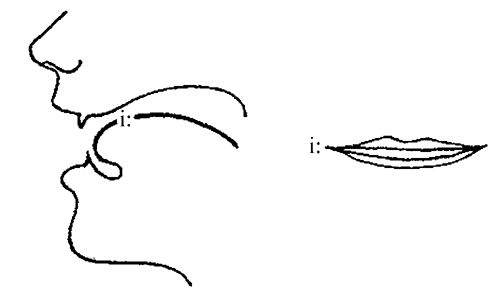
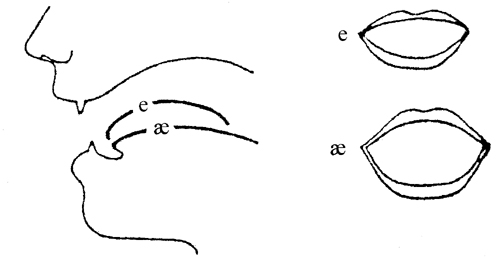
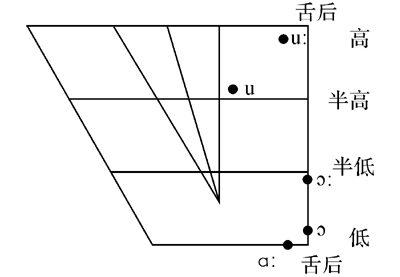
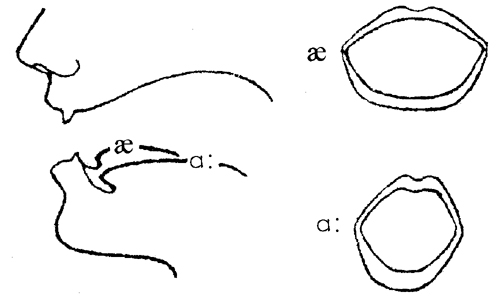
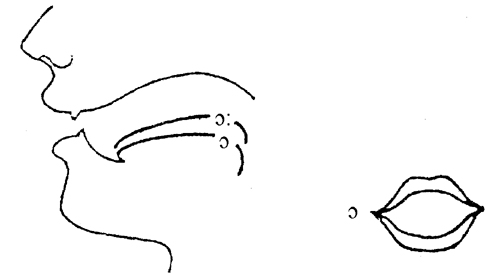
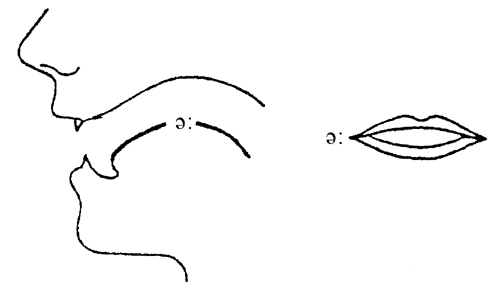
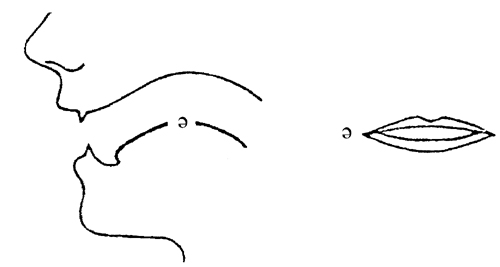
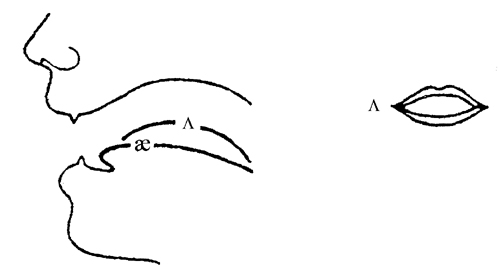
发单元音时舌位不移动,发音过程中气流没有受到任何阻碍,也不发生任何摩擦。根据舌位抬高部位的差异,我们把单元音分为前元音,中元音和后元音。
2.1.1 前元音/i:/的发音要领:
1) 舌端靠近下齿;
2) 舌前部高高抬起,但不接触上齿龈;
3) 唇形呈扁平状;
4) 牙床很小,接近闭合。
我国一些学生常以汉语中“衣”的发音来代替/i:/,其实这是不正确的。发“衣”音时舌位更高,舌前部跟上齿龈已发生接触和摩擦;而英语中的/i:/音与之相比舌位稍低,不能产生任何摩擦。此外,“衣”音较短,而/i:/为长音,必须有足够的长度。
英语中的元音有长短之分,一般来讲,短元音的的长度为长元音的一半,但长元音的长度并非都是一样长的。如果长元音位于重读音节的末尾,或者后面跟着浊辅音,它就有足够的长度;而若后面跟的是清辅音,则其长度只有原来的一半,也就是说相当于短元音的长度。但要注意不要把它读成相对应的短元音,因为英语中的元音除了长短之别外,更重要的是音色之差,它具有区别音位的作用。
练习一
e
be she he these complete compete even evening secret female vehicle appreciate
ee
tree flee see green cheese canteen beef sheet been heel wheel cheese deed meeting feeling keen screen sweet proceed sweet
ea
sea leaf jean reason mean neat cheat cream bean cease deal seal league dean dream feature
reveal meal increase appeal beneath
ie
piece field believe belief relieve relief yield niece achieve brief
ei(y)
seize receive receipt perceive conceive key
i
police machine suite routine sardine unique magazine
练习二
bee
bead beat fee feed feet Lee leave leaf see seize cease
练习三
1. Seeing is believing.(眼见为实)
2. Please keep it a secret.
3. He'll eat peaches and cream.
4. We need to clean the heater.
5. My niece keeps these keys for the police.
6. Do you see the green leaves of each tree in the field?
7. See the breeze teasing(逗弄)the tree, Weaving the leaves or shaking
them free, Tossing(摇摆)the fleece(羊毛)of sheep, that keep On peacefully
feeding, that half asleep.
8. You see, I'm a little bee, Flying from the west to the east,
When you eat sweets with tea, Don't forget me. Don't forget me.
9. Some teachers' teaching pleases some people but other people
feel that the same teaching isn't pleasing. It isn't easy to please
each person but teasing the teacher won't please the teacher and
each teacher needs to be free to teach as he pleases.
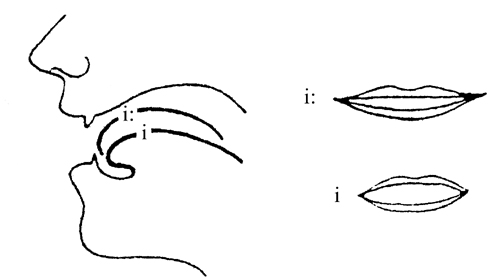
2.1.2 前元音/ i /的发音要领
- 舌端靠近下齿;
- 舌前部抬高,但略低于/i:/的舌位;
- 唇形呈扁平状;
- 开口比/i:/略大,接近半闭。
值得注意的是:/i
/ 并非简单地是/i:/音发音长度的减半,它们之间除音的长短区别之外,
更有可以用来区别意义的音质方面的差异,切不
可简单等同。另外有些学生受地方方言的影响,
把/i/发成类似于汉语中“椰”(ye)的发音,这
同样也是错误的。改正的方法是,/i/是单元音,
在其发音过程中舌位、牙床等都不该有任何移动
和变化。
练习一
i
sit fish forbid wish ring fifth forgive rich king milk prince since
pillow bill sick chip trick digit liquid basis quit victim opinion
distinguish specific definite identity
y
city sunny bicycle puppy typical symbol rhythm pity lily syrup
e
pretty excuse basket wicked english passenger below decrease descend
acted wanted ended added boxes houses horses faces watches catches
wishes washes
ie
carried hurried ladies babies cities varies
a
village percentage carriage language luggage marriage average private
estimate intricate climate considerate accurate
ui
build built guilt guilty
u
busy business minute
ay
Sunday Monday Tuesday Wednesday Thursday Friday Saturday holiday
workday
练习二
feel fill seen sin lead lid deed
did teen tin meal mill peel pill read rid
bead bid least list week wick reach rich sheep ship cheap chip
练习三
feed feet fit leave leaf live seed
seat sit bead beat bit league leak lick
练习四
1. A little pill cures a great ill.
2. Tim is as thin as a pin.(Tim骨瘦如柴)
3. Please give him a ticket for the film.
4. The six little sister live in this city.
5. It isn't difficult for sixty women to finish it in a minute.
6. A cricket(蟋蟀)critically cricked(痉挛) at a critical cricket match,
and so this cricket quitted the cricket match quickly.
7. Bill's big brother is building a beautiful building between two
big brick blocks.
8. The fish in the river swiftly swim And slip through the weeds(水草)with
a
silver gleam(光彩)ill they flick(轻打) their fins(鱼翅)and rise with a
swish (嗖的一声)To nibble(咬)the midges (小虫)that skim(浮动)the stream.
9. Will you sit still,Bill?
I'll sit as still as a hill.
10.“Tick” the clock says, “tick, tick, tick!” What you have to do,
do quick;
Time is gliding fast away. For the country let us do our bit.
our bit.
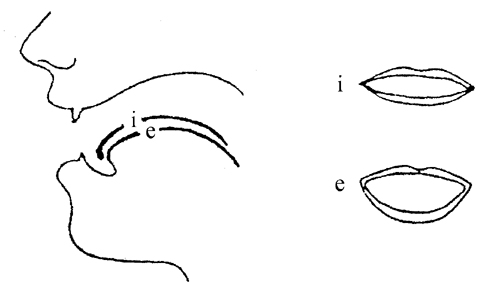
2.1.3 前元音/e /的发音要领
- 舌端靠近下齿;
- 舌前部抬高,但略低于/i /的舌位;
- 唇形呈扁平状;
- 开口比/i /略大,牙床介于半合半开之间。
在汉语中,/e/音只出现于ie的组合中,但不单独和声母拼读。我国北方人常用/ai/来代替/e/,把字母f,x,s等念成/aif,aiks,ais/,这是错误的发音。发/e/音时要注意防止张口过大,并且不能滑动发成双元音。
练习一
e
let bed excel egg when hotel send went lemon fellow decade fetch
jelly nephew nest pet request very letter
ea
head meant feather ready pleasure breath deadly weather leather
health wealth peasant sweater
ai(y)
said again says
a
any many ate Thames manage management
练习二
feel fill fell
read rid red
meat mint met
leaf live left
heel hill hell
neat knit net
练习三
1) Better late than never.(迟做总比不做好)
2) East or west, home is best.(金窝银窝不如自己家的草窝)
3) All is well that ends well.(结局好一切便好)
4) Better to do well than to say well.(说好不如做好)
5) Ted met many French friends.
6) Let's mend the fence when the weather is better.
7) Ted sent Fred ten hens and Fred sent Ted ten pens.
8) Good, better, best,
Never let it rest:
Till good is better,
And better best.
9) To tell that Ted is Well,
That Ben and Bess are Better,
And that Ned says he is best of all,
Let's send a special letter.
2.1.4 前元音/æ/的发音要领
1)舌端靠近下齿;
2)舌前部稍抬高,舌位比/e/低;
3)唇形呈扁平状;
4)开口比/e /略大,牙床介于半开和开之间。
练习一
a
map apple land man factory lamp rash hazard marry campus fan glad
gather ham Athens bank vary narrow crash smash
ai
plait plaid
练习二
lead lid led lad seat sit set sat
peak pick peck pack meal miss mess mass beak big beg bag repeat
pit pet pat teen tin ten tan
练习三
1.This is that beggar's bag.
2.The bed isn't bad.
3.What he said made me sad.
4.I guess they used gas.
练习四
cab
cap bad bat
bag back badge batch
lag lack fad fat
had hat cam cat
man map pad pat
rag rack sad sat
tan tap lamb lap
练习五
1.Fancy that!
2.A fact is fact.(事实胜于雄辩)
3.The rabbit dashed back from the sandy bank.
4.Don't let the cat out of the bag.(勿泄漏机密)
5.Handsome is as handsome does.(品德优美才算真美)
6.Catch that fat man.
7.Canners can can what they can but can not can things can't be
canned.
8.Mary and Sally ran back to gather the black hat and the black
bag.
9.Swan swam over the sea.
Swim, Swan, swim
Swan swam back again.
Well swum, Swan.
10.I met a little boy Jack,
Who comes from another land.
I couldn't speak his language,
But I took him by the hand.
11.To Acton and back
On their narrow track
The trains clang(发出叮当声)
And rattle and bang
And with angry crackles
They sometimes scatter
Electric sparks
Above the clatter.
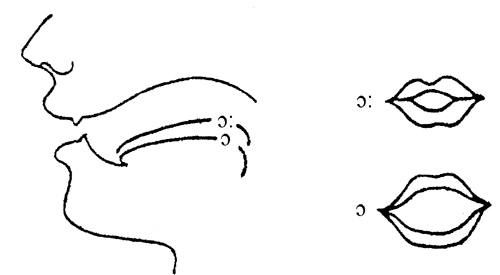
2.2 后元音
英语中一共有五个后元音:
/ɑː ɒ ɔː ʊ uː/
后元音有下列共同特点:
1)舌位的最高点都在舌后部;
2)发音时舌尖都离开下齿;
3)除了/ɑː/是中唇外,其余
的都是圆唇;后三个音 /ɔː ʊ uː/ 发音时双唇略微突出。
后元音的不同之处在于:
1)唇形由/ a: /至/u:/依次缩小;
2)舌后部由/ a: /至/u:/依次递升。
2.2.1 后元音/ a: /的发音要领:
1)舌端离开下齿后缩,舌后部略抬高,舌位较低;
2)唇形自然,略呈圆形,牙床开。
同汉语中的a相比,/ a: /音更长,而且舌端不与下齿接触,因此我们不能简单地以汉语中的a来取代/ a: /音。
练习一
ar
art park car garden farm cigar marvelous lark apart march farther
barn dark jar harm cartoon regard charge bargain bark starve
a
bath father rather path Photograph telegraph staff after rafter
branch glance banana demand can't command grant shan't chance
France plant dance glass class pass grass brass last past fasten
castle blast master vast cast disaster bask ask
al
palm half calm calf behalf
au
laugh laughter aunt draught
ear
heart hearth(壁炉)
er
clerk sergeant(陆军中士) Derby
are
are aren't hectare
练习二
are
art hard heart pardon
part carve calf card
cart regard smart parse(剖析)
pass large larch
练习三
harm ham cart cat
lark lack park pack
heart hat march match
barn ban(禁止) aunt ant
can't can smart mad
练习四
1.A large army marched past the farmyard.
2.Half the class have passed.
3.Margaret's aunt is far smarter than her father.
4.The party stopped at half past five.
5.Martin can't tell a barber from a farmer.
6.You can drive a car,
Running on the road fast.
I can drive a star,
Flying in the dark.
The best I laugh,
I laugh the last.
7.Past barges(大平底船) and carts,
Past harbours and farms,
The cars go darting by(飞驰而过);
Till after dark their sparking lights
Startle the starry sky.
2.2.2 后元音/ɒ/的发音要领:
1)舌端离开下齿,舌身往后缩,舌后部抬高,舌位略高于后元音/ a: /;
2)唇形自然呈圆形,牙床近乎开,但略小于后元音/ a: /。
汉语中没有与此相似的音,有人把它念得象汉语复韵母ao,这是不对的,要注意在发音过程中开口不要过大,并且避免口型的滑动。
练习一
o
dog cost fox doctor gone sorry knock profit body across shock
common property occupy opera borrow follow college lorry popular
economy economics model dock frog
smog spot
(/w/)a
was watch what wash want wander wallet quality quantity swan quarrel
quasi
au
because Austria Australia sausage laurel sauce cauliflower
ou(w)
cough trough knowledge
练习二
dock
dark god guard
cough calf hot heart
clock clerk shop sharp
pot part cost cast
练习三
1. It's wrong not to lock the box.
2. Oliver watches John load a strong box at the docks.
3. Lots and lots of clocks and watches have gone wrong.
4. He walked across the top of the hill and stopped at a cottage.
5. Copy the song, it's not long.
6. The dog wandered through the docks in the fog.
7. Froggy-boggy(青蛙)sat on a rock,
Froggy-boggy had a great shock!
Froggy-boggy fell off the top,
Into the pond(池塘)he fell with a plop(扑通一声)!
2.2.3 后元音/ɔː/的发音要领:
1)舌端离开下齿,舌身往后缩,舌后部
抬高,舌位明显高于后元音/ɒ/;
2)唇呈圆形,较后元音/ɒ/圆,牙床半开,比/ɒ/小
练习一
or
horse nor born morning sport sword record(v.) forty storm portrait
story forward porter reform landlord orchard border report gorge
pork portable porch(玄关) torch
aw
saw lawyer yawn(打哈欠) dawn draw crawl straw jaw awful lawn raw
fawn(幼鹿)
au
author fault faucet audience audio auditorium caution launch cause
caught daughter naughty
ou(gh)
ought fought bought thought sought
al
all tall wall ball call fall hall befall recall Salt false almost
talk chalk
ore
more tore before bore shore explore sore wore
oar
roar board aboard soar hoarse(嘶哑的)
our
four source court pour course mourn(哀悼)
(/u/)ar
war warm ward toward award warn swarm dwarf reward quarter
oa
broad abroad
oor
door floor
练习二
saw
sort war wart
board bought saws sauce
cause course cord caught
afford fort nor north
练习三
pock pork not naught
fox forks spot sport
shot short swan warn
modern morning job jaw
练习四
1.Pride goes before a fall.(骄者必败)
2.They saw four doors.
3.He was born on August the fourteenth, nineteen forty-four.
4.The tallest of the four is walking toward the door.
5.They poured out the warm water.
6.Your four daughters are all very tall.
7.Paul bought straw for the horse and bought salt pork.
8.The reporter gave an important talk in the hall.
9.Please tell our audience what you thought about the game in Boston.
10.My daughter mops the floor every morning at four o'clock.
11.You ought to do what the doctor ordered.
12.The ball rolled across the lawn into the pond.
13.Good morning to all,
Good morning to all who walk,
Good morning to all who crawl,
Good morning to all who soar(翱翔),
Or swim, good morning I call,
To broad and to small, to short and to tall,
Good morning; Good morning to all.
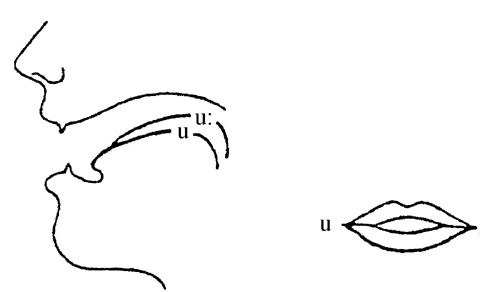
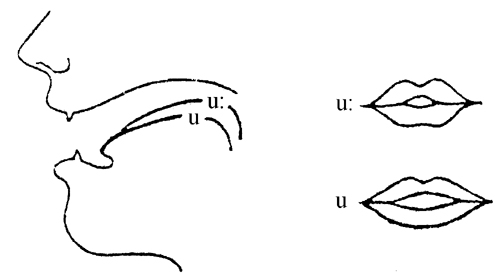
2.2.4 后元音/ʊ/的发音要领:
1)舌端离开下齿,舌身往后缩,
舌后部抬高,舌位明显高于后元音/ɔː/;
2)唇形圆而小,双唇微微向前突出,
牙床半合,比/ɔː/小。
练习一
u
put full pull push bull sugar bullet bush cushion butcher cuckoo
careful faithful July
oo
good cook foot look book woolen took hook room wood childhood
brook stood crook(弯曲)
o
women wolf bosom(胸怀)
ou
would could should
练习二
put
port bull ball
full fall could caught
took talk wood ward
should short cushion caution
练习三
1.Put it into the wooden bookcase.
2.Wood looks like a good cook.
3.The woman couldn't push the cart full of wood.
4.Try as I would, I could do nothing. So I took a broom and left the room.
5. Good cookies could be cooked by a good cook if a good cook could cook good cookies.
6.Look, look, look,
The good old cook,
Took out a pudding!
Look! Look! Look!
7.We should love if we could go to the wood
And look for the crooked may(山楂树),
Where the cuckoo(布谷鸟)took the wood-lark's(云雀)nest(巢),
And pushed her eggs away.
2.2.5 后元音/uː/的发音要领:
1)舌端离开下齿,舌身往后缩,舌后部抬高,舌位明显高于后元音/ʊ/,是五个后元音中舌位最高的一个;
2)唇形尽量收缩成圆而小,双唇略微向前突出,牙床接近合,明显比/ʊ/小。
练习一
u
rude ruler revolution blue solution Susan June use duty music
reduce produce huge opportunity
oo
food fool moon soon spoon too choose pool troop roof croon(低吟)
cool school Cartoon saloon bamboo stool soothe loose tooth shoot
o
do who lose move prove approve improve tomb whose
ou
you group soup through wound
ew
new flew grew chew blew threw dew(露珠)
ue
true Sue blue clue
ui
fruit suit juice cruise(巡逻)
oe
shoe canoe
练习二
lose
loose shoe shoot
true troop grew group
who hoop rule roof
rude root use(v.) use(n.)
练习三
food good fool full
pool pull cool wool
goose good stool stood
Cooed could shoot shook
boot book tool took
练习四
far
fox four full fool
car cost caught could cool
bar box bought bull boot
park pock(痘疮) pour pull pool
shark shock short should shoot
heart hot horse hook whose
练习五
1.Sue has a loose tooth.
2.Please choose either the blue boots or the new shoes.
3.Use your ruler as you do at school.
4.Don't lose the opportunity.
5.Your spoon won't be useful for noodles.
6.At noon in June when the flowers droop(低垂),
And the roofing sky is blue;
When the doves croon through the gloom(浓荫)of the trees,
What do we choose to do?
Why, to troop(结伴去)to the pool where the water cool
Seems far too good to be true!
练习六
1.Look, the screw has got loose.
2.She should go to her dentist at two o'clock and have her loose tooth pulled out.
3.At noon I took a good book
And sat by the pool in wood.
I soon took off my boot
And put my foot in the pool.
Oh! How cool! How cool!
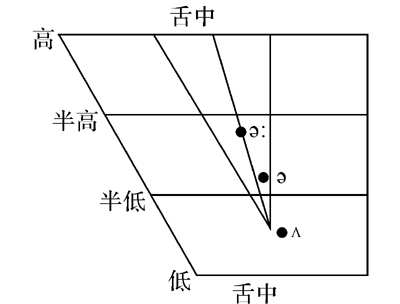
2.3 中元音
英语中一共有三个中元音:/ɜː ə ʌ/ 中元音有下列共同特点:
1)舌端离开下齿;
2)舌中部抬高, 舌身自然、平整;
3)唇形扁平放松;
中元音的不同之处在于:
1)舌中部的舌位由/ɜː/到/ʌ/依次下降;
2)开口程度依次渐大
2.3.1 中元音/ɜː/的发音要领
1)舌端离开下齿;
2)舌身平放,舌中部抬高半开与半合之间,或更接近于半合唇形扁平,略呈微笑状。
汉语普通话中的韵母e与/ɜː/在发音上有点相似,但e发音较短,舌位也较高。我国学生有时会用/ɔ/或/ɔː/来代替这个音,要注意区分。
练习一
er
her herb serve nervous certain err alert concern jerk assert exert
term terminal internal
ir
sir girl firm bird first birthday circle dirty skirt shirt
ur
turn further curve nurse nursery occur burst urban purse purchase
fur
ear
earth earn heard learn research early
(w)or
work word worm worst world worship worth worthy worthwhile
our
journey journal journalist journalism courteous
练习二
1.First come, first served.
2.It is the first bird that catches the worm.
3.Thursday is the first day of the term.
4.Perfect service deserves an earnest and worthy return.
5.The first person in a dirty shirt works in the third firm.
6.The girls learnt world history in the first and third terms at the university.
7.Worms squirm(蠕动)in the earth
When first is heard
The murmur and chirp(唧唧声)
Of the early bird
2.3.2 中元音/ə/的发音要领
1)舌端离开下齿;
2)舌身平展,舌中部抬高,舌位位于/ɜː/和/ʌ/之间;牙床近半开;
3)唇形扁平,是十二个元音中最为放松、松弛的一个。
练习一
a
ago aloud agree amount awake annoy astir available asleep alive
allow woman husband China breakfast tradition important distance
Cuba traditional emotional portable avoidable
e
policemen movement dependent student pavement sentence open heaven
different reference
i
terrible possible feasible flexible incredible horrible
o
method obtain Europe solution oblige ribbon
u
suppose suspect support campus column(圆柱)
ar
forward particular beggar liar collar pillar(柱)
er
worker teacher ruler better manner father paper answer waiter
leader government
or
doctor actorcomfort monitor professor effort conductor governor
editor inventor
ou
famous poisonous spacious dangerous marvelous conscious precious
delicious obvious anxious gracious(亲切的)
oar
cupboard
our
colour neighbour labour honour favour favourite
ure
figure nature culture future literature picture
re
centre metre litre
练习二
return
lantern bird suburb
confirm suffer skirt soccer
German soldier learner ruler
commerce climber nurse sooner
Spurt supper concern concert
Revert cover year lawyer
练习三
1.Please return the alarm clock to the teacher.
2.The students and the teachers will have a get-together the day after tomorrow.
3.He sang for all of us a few moments ago.
4.The wonderful weather was over.
5.You should remember
To attend the lecture.
Who says better late than never?
You'd better be earlier.
2.3.3 中元音/ʌ/的发音要领
1)舌端离开下齿;
2)舌身自然平展,舌中部抬高,舌位略高于元音/æ/,牙床介于开和半开之间;
3)唇形扁平放松。
练习一
u
sun but mum dull jump result luck butter hut shut much thus gun
thumb summer rubber trunk
o
son come mother cover among front colour nothing honey love monkey
onion London won worry oven money
ou
couple country cousin young double enough southern
oo
blood flood
oe
does
练习二
much
match luck lack
fun fan ton tan
cup cap sum Sam
sung sang run ran
hut hat suck sack
练习三
bun burn bud bird
such search hut heard
cup curb shut shirt
fun firm mother murder
练习四
come
can't love laugh
bun barn fun farm
young yarn ton tarn
luck lark punish pass
hut heart government garment
just jar mummy marble
练习五
1.I love buns and butter for supper.
2.Does this bus come from the Summer Palace?
3.He told the funny story just for fun.
4.It's fun to run and jump in the sun.
School is over,
Oh, what fun!
Lesson finished,
Play begun.
5.Hurry up! Hurry up!
There comes the bus.
Don't worry, I'm always lucky.
I surely can catch the bus.
6.There's a mutter and grumble in the ground When thundering comes the train;
Then into the tunnel it rumbles on
And another comes thundering again.
7.Betty bought some butter.
'But' she said, 'this butter's bitter.
Put a bit of better butter.
Will make my butter better.'
So she bought a bit butter.
Better than the bitter butter
And it made her butter better.