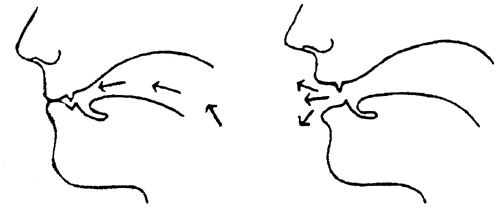
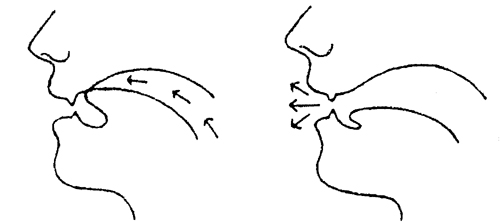
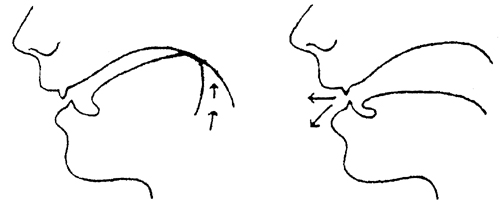
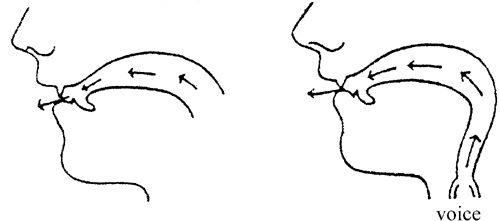
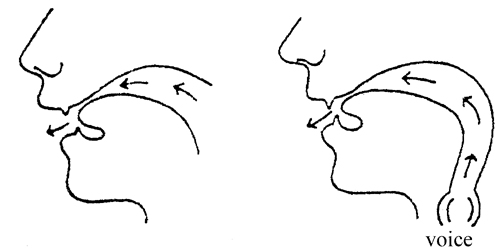
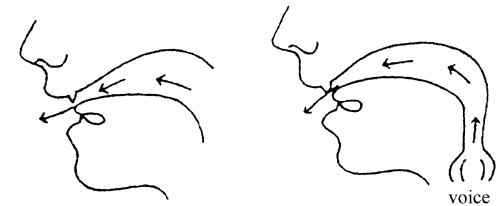
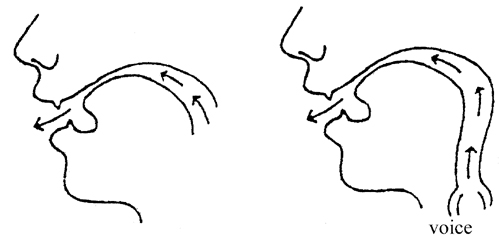
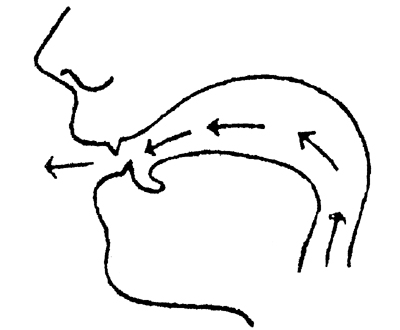
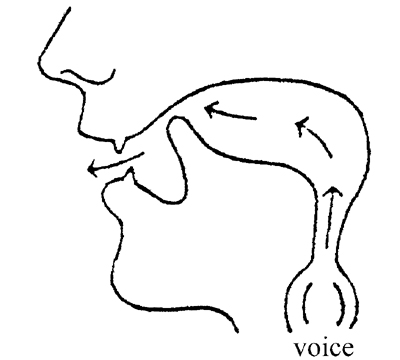
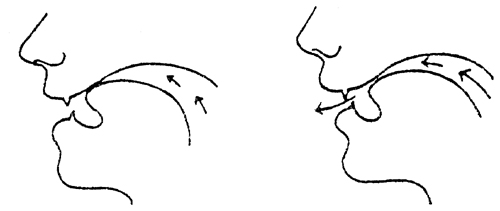
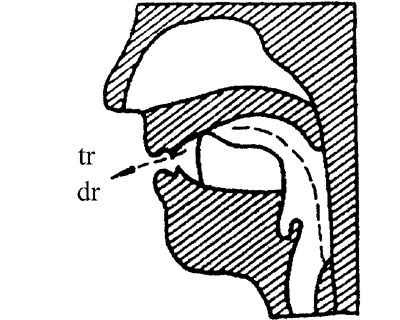
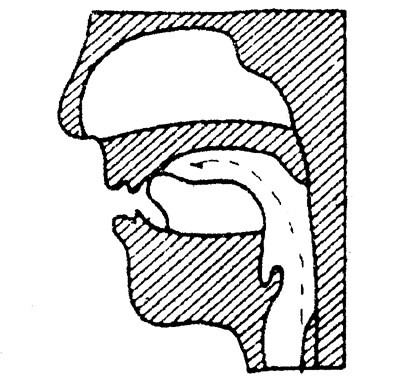
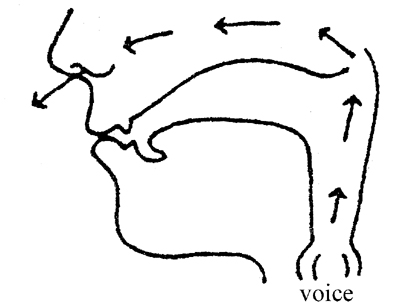
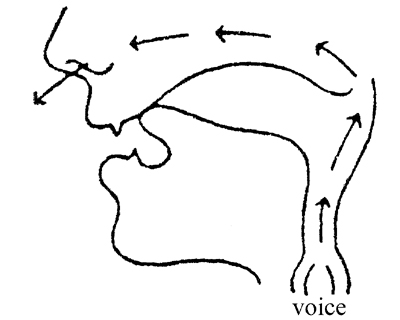
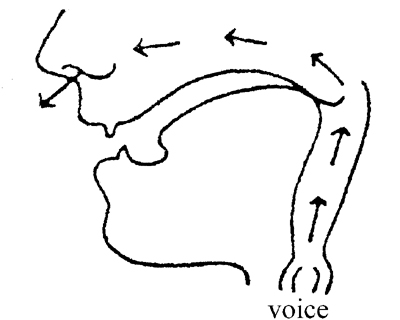
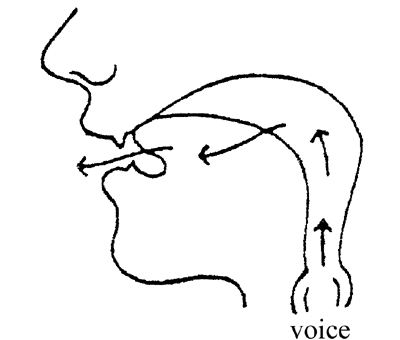
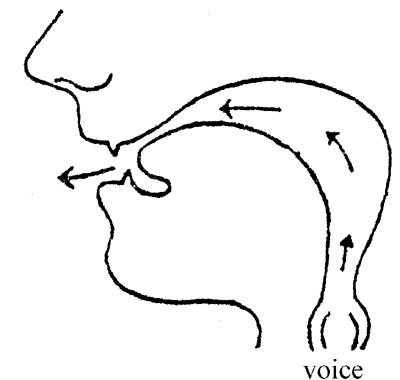
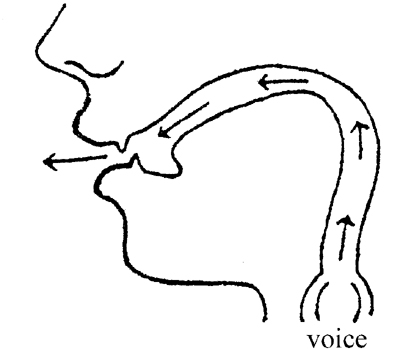
英语中一共有28个辅音,根据其在发音时声带振动与否可分为清辅音(Voiceless Consonant)和浊辅音(Voiced Consonant);根据发音方法则可分为爆破音(Plosive)、摩擦音(Fricative)、破擦音(Affricate)、鼻音(Nasal)、旁流音(Lateral)和半元音(Semi-Vowel);而根据其发音部位的不同又可分为双唇音(Bi-labial)、唇齿音(Labio-dental)、舌齿音(Dental)、齿龈音(Alveolar)、齿龈后音(Post-alveolar)、齿龈硬腭音(Alveolo-palatal)、硬腭音(Platal)、软腭音(Velar)和声门音(Glottal)。
4.1 爆破音
英语中一共有三对清浊对应的爆破音:/p b/,/t d/,/k g/。爆破音有以下共同特点:
1) 所有爆破音都由以下发音过程组成:成阻,持阻和除阻,即先是发音器官的某些部位靠拢,形成阻碍;然后气流集中于闭塞部位的后面;最后气流快速冲开形成阻塞的部位而发出声音。
2) 清浊辅音成对出现,清辅音/p t k/发音时声带不振动,但伴有送气声
练习一
1) 在重读元音前
Pill permanent pain parcel pastime perpetual partial picnic departure pearl penalty parliament
2)在非重读元音前
preparation shopper perform polite popular happen whisper possess pioneer perceive population
3) 词尾
map deep grasp keep pop clip gap trap weep skip cope
4) 在/s/后面
sport speak spoil spectacle spill special spacious specification expend species spread splendid
练习二
1.Peter picks pears, and pumpkins
2. Put the pens and the pencils by the parcel on a piece of paper.
3. Mr. Spock spoke softly of specific space specification.
4. Ping-pong is a popular sport and is played in many places.
5. Mrs. Pipple Popple popped a pebble in poor Polly Pepper's eye.
6. The poor pauper paused on purpose to pawn porpoise
7. A pale pink proud peacock Pompously preen its pretty plumage
8. Bob popped to the pea patch to pick a peck of peas for the poor pink pig in the big pig pen
9. Skip, skip,
Jump the rope;
Plenty of people trip ;
But we hop and play,
And jump all day,
So skip, skip, skip!
10. A clipper ship shipped several clipped sheep.
Were these clipped sheep the clipper ship's sheep
Or just clipped sheep shipped on a clipper's ship!
练习三
1) 在元音或浊辅音之间时
obey aboard rubber baby habit husband table debate labour symbol hobby
2) 在词首
basket born beauty bitter biscuit begin benefit boast beef balloon beyond bargain
3) 在词尾
grab lab job club ebb curb bribe disturb crab herb
4) 在字母m后或t前时
climb comb limb tomb thumb Dumb crumb debt subtle doubt
练习四
1. The robber broke into the bank, but was caught by the police.
2. Bill burst his beautiful blue balloon.
3. Bill boiled beef and broad beans.
4. Bright blue blisters bled badly.
5. Billie Button buttoned her bright brown boots and blue blouse before breakfast began.
6. Betty beat a bit of butter to make a better batter(面糊).
7. The broom blooms when the bluebells bloom.
8. Little Brown blows the broom on the brook's bare brown bank.
Bill had a billboard.
Bill also had a board bill.
The board bill bored Bill.
So Bill sold the billboard to pay his board bill.
And the board bill no longer bored Bill.
10.Billy Biber bit(咬) a bit of buttered biscuit.
A bit of buttered biscuit Billy Biber bit.
If Billy Biter bit a bit of buttered biscuit,
Where's the bit of buttered biscuit Billy Biber bit ?
11. Betty Botter bought some butter.
“But,” she said, “the butter is bitter.
If I put it in my batter,
It will make my batter bitter.
But a bit of better butter— That will make my batter better.” So she bought a bit of butter,
Better than her bitter butter. And she put it in her batter, and the batter was not better.
So it was better Betty Botter bought a bit of better butter!
4.1.2 爆破音/t d/的发音要领
1)软腭上升,阻住鼻腔通道;舌尖和舌端抵住上齿龈和两边的上齿,形成阻碍;
2)气流憋在受阻器官后;
3)气流突然冲破阻碍,舌尖下降,产生轻微的爆破声。 应该指出的是,汉语里的t和d除了是一对吐气和不吐气的清辅音外,其发音部位和英语中的/t/和/d/也不尽相同:汉语里的t和d仅用舌尖抵住上齿,而英语里的/t/和/d/要同时用舌尖 和舌边缘抵住上齿龈和两边牙齿,接触部位较宽。试比较:替-tea,套--town,吐--too, 太--tie。
练习一
t
tiny temperature terrible terrorist toilet tolerate talent (能力) threaten(威胁) promote(晋升) technology(技术) target (目标) theft(偷)
tt
pretty getting dotted flatter
th
Thomas Thames Thailand
ed
looked baked jumped wiped laughed coughed
练习二
tea tame taste temper tongue temporary tend testify(证明) torture(拷打) timid (腼腆的) tedious (枯燥的) typical (典型的) beaten important meeting bottom quality subtle complicated(复杂) constitute(组成) utter literature shelter(蔽护) property right cheat concept defeat hurt recent deposit tempt refute plot(情节) alert(警觉) chat(聊天) step star store stay standard starve stingy(吝啬的) stain(污点) steady(稳定的) stimulate(刺激) studio(工作室) stubborn(顽固的)
练习三
1. The cart got stuck in the mud
2. Don't waste time chatting all day long.
3. Tom told Tait to try to tie the tie Tom tried to tie.
4. They tried to tempt the tattered tramp to take the toothsome tarts .
5. Albert had the habit of eating hot halibut
6. The beet(甜菜) that beat(胜过) the beet that beat the other beet is now beaten by a beet that beats all the beets.
7. If Tommy Tickle tickled Tony Tickle,
Would Tony Tickle tickled Tommy Tickle, too ?
8. A tooter(吹管乐者) who tooted a flute(笛子)
Tried to tutor(教) two tutors(助教) to toot.
Said the two to their tutor,
“Is it harder to toot or
To tutor two tutors to toot? ”
9.Feet, take me east,
Feet, take me west;
Feet take me home again
To tea and let me rest.
练习四
1) 在元音或浊辅音之间时
indeed pardon order modest introduce modern nowadays obedient Moderate indignant forbidden production
2) 在词首
darling debt dying double Downtown damage doubt deliver decrease design desperate detail
3) 在词尾
crowd showed conclude remind depend command mood decade Correspond recommend invade pretend
练习五
mate made but bud
late laid eight aid
sight side fate fade
great grade heart hard
练习六
1. Dick's daughter Diana doesn't like dancing.
2. Ted is reading the card from his good friend.
3. The bad lad limps gladly along the badly-lighted landing(楼梯平台)
4. Diana donated(捐出) a dozen double Damask dinner napkins(餐巾).
5. The Duke(公爵) dragged the dizzy Dane down into the deep damp dank dungeon
6. The dude designed the desperate plot(阴谋) to dupe the dreadful desperado .
7. Daffy-down-dilly(花名) dances,
Dances all the day;
Did you dance in the dewy dawn,
Daffy-down-dilly, say?
4.1.3 爆破音/k g/的发音要领
1) 软腭上升,舌后部抬高,紧贴软腭,形成阻碍;
2) 气流受阻于软腭后;
3) 舌后部突然下降,气流冲出,发出轻微爆破声。
发这一对清浊对应的爆破音时,要注意其双唇的形状取决于紧跟其后的元音 或半元音,如发key和geese中的/k/和/g/时,双唇应呈扁平状,而发cost,quality和great 中的/k/或/g/时,双唇则应呈圆形,只有这样才不会把great念成/greit/。
练习一
k
king kite sky keep
c
colour cough concern confident crisis command succeed accident
ck
clock lock stock kick luck lack
cc
occur soccer
ch
stomach ache school technology Psychology psychiatrist architecture orchestra chorus mechanic
qu
conquer technique unique bouquet opaque
(/kw/)
quality quantity quarter quasi question Require
x(/ks/)
except excellent excite exchange export exercise
练习二
1) 在重读音节前
key kilo kitchen captain college chemistry peculiar kidnap kindergarten candidate(候选人) comedy(喜剧)
2) 在非重读音节前
Characteristics pocket market circle collect good-looking earthquake career Complain commit delicate frequent
3) 在词尾
basic scientific shake quick stock lack fantastic dramatic pink(粉红的) hijack(劫持)
4) 在/s/后
school sky skin skill discover score sketch skeptical scold scatter (散布) scholar(学者) scheme(计划)
5) 在n前
knock knot knit know kneel knife knee knowledge knight knob
练习三
1. The cook baked a cake that was like a rock.
2. Put on your coat or you'll catch a cold.
3. Can Kitty cuddle(拥抱)Clara's kitten
4. The cat-catcher can't catch caught cat.
5. My cook cooked a cup of cold creamy custard
6. Cut your coat according to your cloth .
7. Take care of the pence and the pound will take care of themselves(小事留意,大 事顺利).
8. I was looking back To see if she was looking back To see if I was looking back To see if she was looking back at me.
9. Buttercups(金凤花) and kingcups And cowslips(立金花) too; I'm picking them all For a bouquet for you.
练习四
1) 在元音或浊辅音之间时
begin cigarette regain together regard argue figure legal example exact exaggerate
2) 在词首
gather gaze guard guide gone government global grief guarantee Guilt glory gorge(峡)
3) 在词尾
flag bag frog drug drag dig league colleague dialogue vague
练习五
back bag lock log
pick pig dock dog
leak league case gaze
duck dug Kate gate
练习六
1. All that glitters is not gold.
2. A good beginning makes a good ending
3. Gifted Gertrude Gray gazed at the grey goose gaily.
4. Get George green gloves and gleaming galoshes(套鞋).
5. Green greengages(青李子)grow in green greengage trees.
6. Grable grabbed a goose and gander.
A goose and gander Grable grabbed.
When Grable grabbed a goose and gander,
7. Where are the goose and gander Grable grabbed “Where are you going, big pig, big pig ” “I'm going to dig in the garden.” “In the garden to dig! Disgraceful(丢脸的) pig!”
“Beg pardon, ma'am, beg pardon.”
4.2 摩擦音
英语中一共有10个摩擦音: /f/, /v/, /θ/, /ð/, /s/, /z/, /ʃ/, /ʒ/, /h/, /r/。
摩擦音的共同特点:
1) 两个发音器官合拢,形成狭窄通道;
2) 气流通过该通道时发生摩擦发出声音。
3) 摩擦音跟爆破音不同,在词尾可以有一定长度。
4.2.1 摩擦音/f v/的发音要领
1) 上齿轻压下唇内边缘;
2) 气流持续不断地从唇齿之间摩擦通过,由口腔 而出。/f/是清辅音,发音时声带 不振动;/v/是浊辅音,发 音 时声带振动。
一些学生由于受地方方言的影响,往往把/v/发成/w/。要避免这种错误,注意在发/v/时,上齿要轻咬住下唇,就不会让气流从双唇中摩擦通过错发成/w/音。
练习一
f
father fine funny unfair life belief defend finance Function forgive fold fashion
ff
off suffer affair coffee staff Stuff stiff cliff(悬崖)
ph
photo physics phone phonetics phrase geography graph(图表) Philosophy sphere phenomenon
gh
laugh cough enough tough rough
练习二
v
love nervous movement cover event silver dove vanish vehicle variety(种类)
f of
ph nephew
练习三
leaf leave surface service
proof prove fast vast
fan van fail veil(面纱)
few view fine vine(葡萄树)
练习四
1. I fancy they will follow the fashion.
2. They feed on fresh fruit.
3. Fifteen fashionable females are flying from Frankfort to France for fresh French fashions.
4. Phone Phil for fine fresh fish.
5. Four flies flew past fat Flora's flat.
6. Philip's van delivers vegetables and fruit very fast
7. He followed the footpath through the fields to the forest.
8. Few have ever seen the view.
9. Puff, puff Puff the fluff, And fly, feather, fly; Puff, puff, That's enough— It's far, far off in the sky.
10. Come visit the lovely violets That live in the valley here; The loveliest violets you have ever seen Over the hills or near.
4.2.2 摩擦音/s z/的发音要领
1) 舌尖和舌端轻触上齿龈;
2) 气流从舌端和上齿龈之间通过,产生摩擦声,由口腔而出。
/s/是清辅音,发音时声带不振动,/z/是浊辅音,发音时声带振动。/s z/是摩擦音中摩擦声较响的一对,也可用舌尖轻触下齿,气流同样由舌端和上齿龈之间经过,产生摩擦。
练习一
s
soldier course response respect suspense silent jumps laughs cooks months cliffs
ss
pass essay lesson assign message princess miss guess possible assume class
c(e,i,y)
parcel cease ceremony certificate silence violence cigar criticize circle Circulation circumstance accident succeed bicycle
cu
rrency privacy x(/ks/) excite exercise excellent exchange excess exclude
练习二
z
zoo amaze lazy zone citizen realize gaze doze haze graze
zz
jazz buzz dizzy
s
easy praise deserve revise feasible amuse compromise stairs knives apples dresses clothes houses washes
ss
dessert possess scissors dissolve
x(/gz/)
exist exert example exhaust examine exact
练习三
serve deserve horses houses
assign design excuse(n.) excuse(v.)
cease seize course cause
cliffs knives society anxiety
price prize sample example
练习四
1. Send the parcel as soon as possible.
2. I saw six small seals on the seashore.
3. Sister Suzy will sing us some sweet songs.
4. He says sweet-scented shaving soap soothes(缓解) sore skin.
5. Say the next sentence softly and smoothly.
6. Sally always suffers from sea-sickness when he is at sea.
7. Tim's twin sisters sing tongue twisters.
8. Sally said she saw several seagulls Soar southwards silently on Saturday.
9. “Did you see the snake as it slid through the grass ”
“Yes, yes, we saw it pass.”
“Did you see it suddenly stop and hiss and strike ”
“Yes, we saw it miss, and strike once more, and the grasses sway(摇摆), As swift and silent it slithered(滑动) away.”
10. Mr. See owned a saw And Mr. Soar owned a seesaw(跷跷板).
Now See's saw sawed Soar's seesaw Before Saw saw See,
Which made Soar sore. Had Soar seen See's saw
Before See sawed Soar's seesaw, See's saw would not have sawed Soar's seesaw.
So See's saw sawed Soar's seesaw.
But it was sad to see Soar so sore Just because See's saw sawed Soar's seesaw!
11. The zoo is closed when the season is over.
12. There are dozens and dozens of ways of pleasing the visitors.
13. Those roses deserve the prizes.
14. We drowse(打瞌睡) and doze under the trees
In a mazy(迷宫般的) haze on days like these,
Dizzied with sounds of sheep that browse,
And lazy sounds of grazing cows,
And buzz of busy bees, whose sound
Makes lazier laziness around.
4.2.3 摩擦音/θ ð/的发音要领
1) 舌尖和舌端边缘轻触上齿背;
2) 气流通过其缝隙产生摩擦声,由口腔而出。
/θ/是清辅音,发音时声带不振动;/ð/是浊辅音,发音时声带振动。
由于汉语中没有这个音,一些初学者往往会觉得难以正确发这一对音,甚至以/s z/或/f l/ 来代替它们。如果觉得难以把握,不妨把这一对音发得夸张一些,把舌尖置于上下齿之间可见处,即舌尖略微伸出,也可发出这一对音。
只有字母组合th发/θ/ 或/ð/音。
练习一
thin thank threat wealth faith worth theory thoughtful theme thrill theft author athlete authority thunder then thus those therefore otherwise nevertheless further weather worthy clothe smooth
练习二
/θ ð/
bath bathe breath breathe cloth clothe south southern
/s θ/
sing thing sank thank sought thought pass path mouse mouth face faith worse worth seem theme
/f θ/
fan thank offer author fought thought fresh thresh float throat flew threw
/z ð/
breeze breathe close clothe wise with zone though
/ð l/
there declare that let then lend though low they lay them learn
练习三
1. Something is better than nothing.
2. Ruth took the path to the theatre.
3. This myth(神话) is a mystery to me.
4. The thieves thought the author was wealthy.
5. There are thirty thousand feathers on that thrush's throat.
6. Through six thick swamps stumbledTonny.
7. Mother and father went through thick and thin.
8. My thread is too thick!My thread is too thin!
So this is the thing we'll do; We both will ask Mother To give us another, And with it a thimble too!
9. I'm thankful for a thousand things:
For faithful earth, for bird and breath,
For thought and health and strength and mirth,
And maybe, when it comes, for death.
4.2.4 摩擦音/ʃ/, /ʒ/的发音要领
1) 舌身平伸略往后,舌尖和舌端轻触上齿龈后部;
2) 舌前部向硬腭抬起,舌身两侧贴住两边上齿,舌身和硬腭间形成较大空隙;
3) 双唇分开,略成喇叭形;
4) 气流经过舌身和硬腭间的空隙形成摩擦,由口腔而出。
/ʃ/是清辅音,发音时声带不振动,/ʒ/是浊辅音,发音时声带振动。
我国不少学生都觉得这一对音难以把握:一些北方的同学常把/ʃ/发成汉语 拼音中的sh,而一些南方的同学又把/ʃ/发成汉语拼音中的x或“虚”,把/ʒ/发成“鱼”,这些都是不正确的发音。汉语 sh是卷舌音,发音时舌身卷向硬颚,其舌位比英语/ʃ/更后;汉语x是舌前部和硬腭间产生的摩擦音,发音时舌尖抵下齿背;而发“虚”或“鱼”时,双唇要明显收拢如吹笛子状,而且其舌位也很不相同。
练习一
sh
shine sharp shame shortcoming shock shortage shift bush rubbish publish fashion accomplish
s(u,i)
sure insure ensure sugar tension Asia pension
ss(u,i)
assure reassure pressure issue Russia impression expression profession mission permission
ci
precious delicious suspicious efficient sufficient musician physician politician academician social specialty racial artificial financial commercial
sci
conscious conscience
ti
addition contribution connection competition communication essential patient nutritious
ch
machine moustache chef champagne chauffeur sch schedule
练习二
su
usual casual treasure pleasure measure leisure
si
vision decision confusion explosion occasion television
ge
garage prestige beige rouge
z
Seizure azure(碧蓝的)
练习三
/s ʃ/
sign shine sigh shy same shame sock shock see sheet sew show sir shirt sort short suck shut sell shell
/z ð/
use usual please pleasure expose exposure confuse confusion seize seizure
/ʃ ð/
pressure pleasure permission decision pronunciation Asian
练习四
1. She says she shall sew the sheet.
2. Is she sure she shut the shop
3. She sells seashells on the seashore.
4. His shirt soon shrank in the suds.
5. She showed me some machine-made horse-shoes.
6. Shy Sheila sat shivering in her slim, shiny silk shirt.
7. She wishes to brush up her English and Russian.
8. Polish the shoes with the brush.
9. Usually he takes pleasure in cleaning the garage.
10. There is an explosion in the garage.
4.2.5 摩擦音/h/的发音要领
气流从肺部用力呼出,经过声门时发出摩擦声,由口腔不受任何阻碍而出。
/h/是清辅音,发音时声带不振动。 /h/音从来不出现于词尾,只出现在元音前面,其音色由在它面的元音所决定,因此,我们可以这样说,英语中有多少元音,/h/就有多少种发音方法。
发含/h/音的单词时,既不能漏发/h/音,同时又要避免摩擦过重。
练习一
h
hole heat perhaps childhood hut holiday adhere behave Inherit humorous hazard harmony
wh
who whom whose whole (h) hour honest honour heir vehicle ghost exhibition exhaust
练习二
1. Helen has heard how Henry hurried home.
2. Have they heard the whole of his story
3. Has he hung his hat in the hall
4. How high His Highness holds his haughty(高傲的) head!
5. The hunter hid himself behind a high hedge(篱笆).
6. Hundreds of horses' hard hoofs hit the hard high road.
7. Isn't that horrible when you are hot and in a hurry, and you've got to hold your hat in you hand
4.2.6 摩擦音/r/的发音要领
1) 舌端向上齿龈后部抬起, 但并不接触;
2) 舌身后缩,舌中部下降, 其两侧边缘接触上臼齿,双 唇略微突出;
3) 气流经舌端和上齿龈之间形成磨擦,由口腔而出。
练习一
r
ready breeze material rapid throat press conference
rr
sorry hurry correct narrow borrow terrible arrive
wr
write wrong wretched wrinkle wrist wrap wreck(失事)
rh
rhythm rhyme rhetoric
练习二
1. Ronald rolled a round roll around a round room.
2. Those red roses are really very pretty.
3. Robert rode a rawboned racer.
4. Harris rarely reads literary reviews.
5. I promise your room will be ready tomorrow.
6. The real reason is rather curious.
7. The royal lady received the roses regally at the recent reception(招待会).
4.3 破擦音(The Affricate Consonant)
所谓破擦音,顾名思义,即是爆破音和摩擦音的组合,它既可以被认为是一个单一的音位实体,也可以被看作是两个音位的结合。英语中一共有三对破擦音,它们都是由爆破音/t d/+摩擦音构成的:/tʃ dʒ tr dr ts dz/。
破擦音的共同特点:
1) 发破擦音时,其所含的爆破音成阻的两个发音部位不像发单独的爆破音时那样完全分离,而是仍靠得很近;
2) 气流冲破阻碍,几乎同时发后一个摩擦音,气流由口腔而出。
3) 若声音延续,只可以听见后一个摩擦音。
4.3.1 破擦音/tʃ dʒ/的发音要领
1) 舌端挨着上齿龈后部,做好发/t/的准备;
2) 舌身同时抬高,与发/ʃ/音相同;
3) 双唇分开,略往外翘;
4) 气流冲破舌端和上齿龈后部的阻碍,几乎在发/t/ 音的同时发/ʃ/音。
/tʃ/是清辅音,发音时声带不振动,/dʒ/是浊辅音,发音时声带振动。
练习一
ch
choose chain chart chief charge challenge beach reach touch orchard research coach
tch
watch match fetch kitchen wretched hatch(孵化)
ti
question suggestion digestion
tu
future gesture feature nature mature adventure capture culture fortunate opportunity
练习二
j
jeep judge object major jam joke jealous pajamas
G
giant lodging margin Digital bridge suggest pigeon danger change edge general generous genius gorge indulge Gymnasium gymnastics
练习三
/ʃ tʃ/
wash watch share chair sheep cheap cash catch sharp chart shoes choose
/ʒ dʒ/
vision pigeon measure major pleasure procedure garage large
/tʃ dʒ/
chain Jane choose juice chart jar cheap jeep Choke joke chin gin
练习四
1. Charles chose cheap cheese and cherries.
2. Jane had chicken and French fries for lunch.
3. The cheerful children are chanting charming tunes.
4. Charlie's chilly(冷淡的) cheap chips shop sells Charlie's cheap chip.
5. George and Gerald judged generally.
6. John urged Judy to buy a digital watch.
7. Joan joyously joined jaunty (活泼的) John in jumping-ups(即兴舞).
8. Can you imagine an imaginary menagerie manager imagining managing an imaginary menagerie
9. Chuck! Chuck! Chuck! I've hatched a little duck, And such a batch(群) of cheeping chicks, Chuck! Chuck! Chuck!
4.3.2 破擦音/tr dr/的发音要领
1) 舌尖和舌边缘抵住上齿龈 后部(比/t d/稍后,在/r/音的部位)和两边的上齿;
2) 舌身下降,做好发/r/音的准备;
3) 双唇收圆,稍向前突出;
4) 气流冲破舌尖和齿龈之间的阻碍,发/t/音后迅速发/r/音。
练习一
tree true triumph trend tragedy trick attract poetry entrance retreat actress street straw strange strong strike stroll drop laundry drum dreadful drama drought address drip dragon draft drug
练习二
/tr-dr/
try dry trunk drunk tree dream train drain trip drip truck drug
/tr--tʃ /
treat cheat true chew trace chase trees cheese train chain trip chip
/dr-dʒ/
draw jaw dream Jim drum just dry giant drain Jane children pigeon
练习三
1. The children tried to trim the trees.
2. The strapping soldiers strived sternly to strengthen the stronghold.
3. The strenuous struggle strangled the strong.
4. I had a strange dream in the train.
5. Trudy's dream had come true at last.
4.3.3 破擦音/ts dz/的发音要领
1) 舌尖和舌边缘抵住上齿龈和两边的上齿阻住气流;
2) 屏住气,舌端慢慢下降;
3) 释放气流发出摩擦声。这是一对以/t d/成阻,以/s z/排阻的破擦音,仅出现于词尾,而出现于词中时多分开为两个音位发音,如out-side ,outset等。字母组合t(e)s、d(e)s常发/ts dz/音。
练习一
lots huts boots targets products debates profits projects dates insects infants graduates regrets threats melts negotiates broadcasts instructs what's it's let's aunt's words thousands cards rewards kids decades invades concludes fades ads offends proceeds dad's David's world's
练习二
carts cards mates maids hats heads seats seeds heights hides rates raids bits bids coats roads
练习三
1. Most kids like lots and lots of kites and sweets.
2. He hides in the wards and shoots at the targets.
3. Keats wants lots of cards and boards.
4. He holds three cats in his hands.
5. There are hundreds and hundreds of arts and crafts(手工艺品) in the huts.
6. Gifts, gifts, gifts! Rafts(木筏) of gifts! Gifts from you and me. The wind shifts. The tide lifts. Rafts drift out to sea.
7. Amidst the mists and the coldest frosts(霜), With bare wrists(手腕) and stoutest(勇敢的) boasts, He thrusts his fists against the posts, And still he insists he sees the ghosts.
8. The winds, the winds, the winter winds, Have blown the sands to sea; But friends, my friends, those loving friends, Are still kind friends to me.
4.4 鼻音(The Nasal Consonants)
英语中共有三个鼻音:/m n ŋ/。它们的发音方法与爆破音具有相同之处, 即在口腔某处形成完全阻塞;不同之处在于爆破音的气流冲破了阻碍,由口腔而出,而鼻音 则是气流由鼻腔自由通过而出。因此鼻音可以延续,发音时声音振动,是浊辅音。
鼻音的共同特点:
1) 软腭下垂;
2) 口腔某一部位形成阻碍;
3) 气流从鼻腔而出。
4.4.1 鼻音/m/的发音要领
1) 软腭下垂;
2) 双唇紧闭,同发/p b/音;
3) 气流从鼻腔自由通过,同时声带振动。
练习一
m
make mad mouse moist moderate miraculous prompt stormy statement remedy Olympic omit bottom sum dim fame tame doom
mm
mummy summer common swimming hammer communication
mb
lamb climb comb tomb dumb thumb numb crumb limb
练习二
1. Sam made a lot of common mistakes in his homework.
2. More and more of my motors were damaged.
3. Tom climbed the mountain with me in autumn.
4. What an amazing memory Mary must have!
5. I remembered it was time for my mother to come home.
6. Our musician made music and moved multitudes(众多的人).
7. Tom's manager believes that money makes the mare go.
8. Jim's mighty master murdered the maddened magistrate(地方行政官).
9. Mother met a monkey in the middle of the market and made a mailbox of money.
10. Mother makes Mary march many times around the room to martial music in the morning.
11. My motor is humming, I'm coming, I'm coming, Make room, make room! Not a minute to wait I'm late, I'm late, Make room, make room, make room!
4.4.2 鼻音/n/的发音要领
1) 软腭下垂;
2) 舌尖紧贴上齿龈,同发/t d/音;
3) 气流从鼻腔自由通过,同时声带振动。
一些学生由于受方言的影响,常把/n/发成/l/,要注意区分。
练习一
n
neglect narrow nervous nightmare normal negative monitor motionless ministry harmony journalism incredible function information heroine heighten headline frighten orange lounge(休息室) angel strange spinach(菠菜)
nn
funny channel tunnel sunny beginning innocent annoy announce
kn
know knight kneel knife knit knot
gn
sign assign foreign campaign champagne
mn
autumn solemn
练习二
night light nine line
knife life knot lot
name lame neighbour labour
net let knock lock
练习三
1. A friend in need is a friend indeed.
2. Nancy's number is neither ninety nor nineteen.
3. Ned needed to name no new names.
4. Do you know where the new nurse is
5. The rain in Spain mainly falls in the plain.
6. Don't spend more money than you earn.
7. Nina needs nine knitting needles to knit naughty Nina's knickers(灯笼裤) nicely.
8. Any noise annoys an oyster(牡蛎), but a noisy noise annoys an oyster most.
9. Nighton Nittle lit nine lights last night.
10. Knott was not in. Knott was out knotting knots in netting. Knott was out, But a lot of knots were in Knott's knotty netting.
4.4.3 鼻音/ŋ/的发音要领
1) 软腭下垂;
2) 抬高舌后部,紧贴软腭,同发/k g/音;
3) 气流从鼻腔自由通过,同时声带振动。
一些学生由于受方言的影响,常把/ŋ/发成/n/,要注意区分。发/n/音时,舌尖顶在上齿龈上形成阻碍;而/ŋ/则是抬高舌后部紧贴软腭形成阻碍。
练习一
ng
thing wing king cling bang single finger stronger angle jungle(丛林) singer ringing hanging bringing clinging
n(后接/k/)
think sink pink monkey drink link uncle wrinkle conquer banquet
练习二
tongue ton sing sin
thing thin length lens
along alone wing win
练习三
1. Please sing along with my uncle.
2. The monkey's fingers were clinging to the hanging rock.
3. He hung the ring in the jungle with a long string.
4. Spring brings us a lot of charming things.
5. Better die standing than live kneeling.
6. She was singing songs all the evening.
4.5 旁流音(Lateral) /l/
英语中只有一个旁流音:/l/,但它有两个重要音位变体,即清晰的(clear)/l/和含糊的(dark)/l/。
清晰/l/的发音要领:
1)舌尖抵上齿龈;
2)舌前部同时向硬腭抬起;
3)舌两侧肌肉收缩,形成空隙;
4)气流从舌一侧或两侧通过,同时振动声带。
含糊/l/的发音要领:
1)舌尖抵上齿龈;
2)舌前部不抬起,但舌后部向软腭抬起,不接触;
3)其余方法同清晰/l/。
练习一
lovely loose lucky allow declare legal glass claim flight please blame slight railway beautiful parallel financial skillful silver signal schedule respectful solve pulse bowl
练习二
people bubble little idle uncle angle pupil table title cradle wrinkle struggle awful arrival whistle puzzle rifle survival muscle refusal
练习三
lest rest long wrong loud round flight fright light right glass grass loyal royal late rate
练习四
1. There's a large clock in the clean and lovely lobby.
2. Look before you leap(三思而后行).
3. It's no use crying over spilt milk.
4. Let the sleeping dog lie(莫惹是非).
5. The foolish fellow left his wallet in the table.
6. The lone lovers leave the leafy lane.
7. There is a layer of bones in the lion's lair.
8. The library is littered with literary literature.
9. The bad lad limps gladly along the badly-lighted landing(楼梯平台).
10. When all else fails, say “Hail to all males!”
11. The longer you stay, the more likely the better is to be lost.
12. Tonight is a light night; you mustn't light a night light on this light night.
13. Lots of little London lamplighters light London's lots of little lamps.
4.6 半元音(Semi-vowels)
英语中有两个半元音:/j/和/w/。它们并不等同于汉语拼音中的y和w。汉语中的y和w实际上就是i和u,在音节前才写为y和w。
半元音的共同特点:
1)发音时基本不产生摩擦,与元音相似;
2)声带振动;
3)不能像元音那样构成音节,故而得名。
4.6.1 半元音/j/的发音要领
1) 舌前部向硬腭抬起,跟/iː/的舌位相似;
2) 略有摩擦后迅速滑向紧接其后的元音,声带振动。
练习一
y
yellow youngster yearly youth yield yard yap(狂叫) yelp(叫) lawyer beyond
u
use united unique universe
e
pure tune
ew
few news dew
i
familiar senior view union onion million
练习二
1. The young lawyer is reading yesterday's newspaper at his beautiful yard.
2. Your yellow costume suits you.
3. Yale University is not in the State of New York.
4. You broke the yellow yo-yo Hugh used to use.
5. When the orchard-yield will be gathered soon, And the field beyond are yellow with corn, The dog in our yard awakes with a yawn, And yaps and yelps at the yellow moon.
4.6.2 半元音/w/的发音要领
1) 双唇略收圆并突出,跟/uː/的舌位相似;
2) 双唇略有摩擦,气流经口腔由双唇空隙而出,迅速滑向其后的元音,声带振动。
练习一
w
weapon weary welfare wit worthwhile warrior software aware award twelve twenty twin twinkle twister
wh
what where whale when wheat whisper
qu
quarter quality quantity queen quarrel queer(奇怪的)
练习二
west vest worse verse
wary vary whale veil
wine vine willow villa
练习三
1. Equal pay for equal work.
2. Where there is a will, there is a way.
3. I wonder where she walked.
4. We will work well if we are wise.
5. Which is the witch that wished the wicked wish?
6. What a wonderful wedding!
7. What a queer quick questioning quiz!
8. Will you wait a while for some warm wine to keep you warm?
9. The wire wound around a wheel.
10. Little Woodrow's wooden whistle wouldn't whistle.
11. His wise wife whistles while weaving his worsted(毛线的) waistcoat(背心).
12. The wild wolf roams the wintry wastes.
13. William wished he hadn't washed his wrist watch.
William washed all the wheels and works of his wrist watch.
Now, how it jumps and jerks.
William wished that he hadn't washed his wrist watch's works!