|
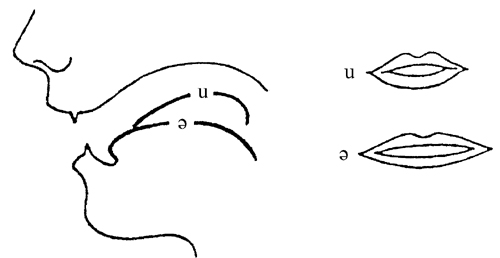
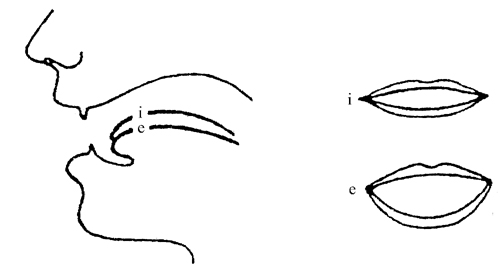
3.1.1 双元音/ei/的发音要领
1)从单元音/e/开始发音,朝双元音/i/的方向滑动,但不到/i/ 的位置即停止;
2)发音过程中下腭向上合拢, 舌位也随之稍稍抬高。
|
 |
练习一
a
date name plane lake face gate fame debate plate classmate wave jade
Cane lady waste haste paper labour change April cradle baby danger endanger
ai
wait paid maid rail tail rainy aim waist bait jail main nail pain sailing
daily faith fail gain
ay
lay may pay today ray way delay day Bombay play relay decay hay gray
ei
Vein veil forfeit eight weigh weight neighbour
ey
they survey convey hey obey grey
ea
great break steak
练习二
mate
met late let
wait wet fade fed
main men gate get
sail sell eight ate
paper pepper bait bet
Better late than never.
It is never too late to mend.
You must hit the nail on the head.
练习三
1. No pains, no gains.
2. Call a spade a spade.
3. Today is Jane’s payday.
4. Haste makes waste.
5. Don’t make the same mistake again.
6. A penny saved is a penny gained.
7. They arranged for David to take the table away.
8. The cake is on the plate and the plate is on the table
9. When the cat is away, the mice will play.
10.They came on the same day by the same train.
11.Rain, rain, go away,
Come again another day,
Little Johnny wants to play.
12.Today, today
Is the first of May;
On this happy day in May
Boys and girls dance and play.
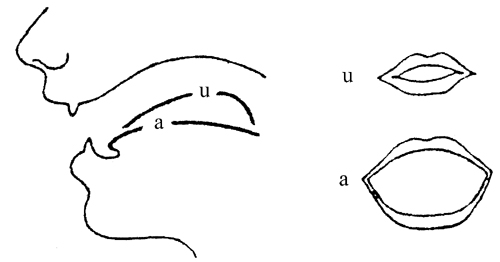
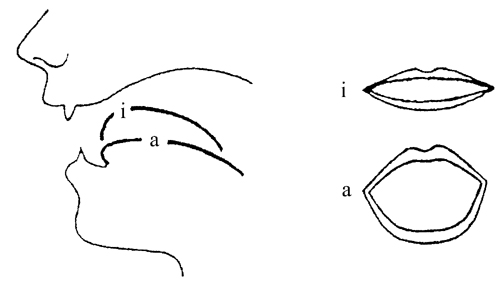
3.1.2 双元音/ai/的发音要领
1)该双元音中的/a/是个前元音,在英语中不单独存在,仅用于双元音中。它的舌位很低,和汉语普通话里的“a”相似,但舌位更靠前,发音时舌尖抵住下齿。
2)从/a/开始发音,朝单元音/i/的方向滑动,但不到/i/的位置即停止。
3)发音过程中下腭向上合拢,舌位逐渐抬高。 |
 |
练习一
i
hi bike hide wife device kite bite write hike realize modernize organize
emphasize Advertise mind kind bind behind blind wind(v.) find mild child
wild
y
by try sky rely deny cry why lying dry defy cycle style type analyze
identify modify clarify purify notify
i(y)e
lie die tie tried good-bye dye
igh
high sigh tight fight right delight bright flight mighty sight night
might
ei
either neither height
uy
buy guy
练习二
| |
fine |
far |
fame |
fan |
| |
buy |
bar |
debate |
bat |
| |
sky |
car |
cake |
cab |
| |
guy |
cigar |
gate |
gather |
| |
height |
hard |
hate |
hat |
| |
life |
laugh |
late |
latter |
| |
tie |
task |
take |
tack |
| |
child |
chart |
chase |
chat |
练习三
1. Time and tide wait for no man.
2. Great minds think alike.
3. Out of sight, out of mind.
4. Strike while the iron is hot.
5. Let by-gones be by-gones.
6. Mike tried five times to get the prize.
7. His wife bought five ice-creams for his five sons on Friday night.
8. Mr. White tried and tried but he couldn’t climb higher.
9. At five o’clock on a winter’s night, it’s high time to strike a light.
10.Fly, kite, high in the sky,
Bright in the shining light;
Then I’ll wind my string, and try to
Guide You nicely down for the night
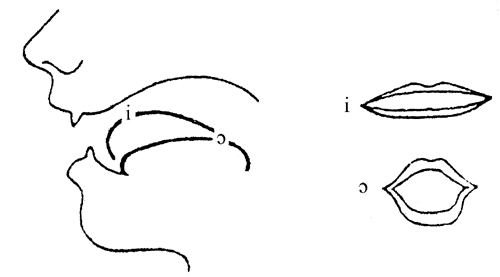
3.1.3 双元音/Ci/的发音要领
1)舌位从/C/和/ C:/这两音之间的位置向/i/滑动,但在不到/i/的位置即停止。
2)下腭向上合拢,口型从圆唇变为扁平。 |
 |
练习一
oi
oil boil coin foist choice spoil soil point voice noise toilet point
moist exploit join joint
oy
boy toy joy soy enjoy destroy employ annoy voyage oyster
练习二
1. The spoilt boy destroyed his toys.
2. The boy enjoys listening to the noise of coins.
3. Oh joy, oh joy,
A child with his toy,
Shouting at the top of his voice,
Making such a terrible noise,
Oh joy, oh joy!
3.1.4 双元音/Eu/的发音要领
1)从比单元音/E/稍高、接近/E:/ 的舌位开始发音,朝单元音/u/的方向滑动,但不到/u/的位置即停止。
2)舌位由高到低,,牙床由大到小,唇形由扁平偏圆到略圆。
|
 |
练习一
o
go so solo photo note remote rose hole rope alone lonely pose joke tone
wove code bone Choke nose vote zone oppose suppose old folk fold sold
gold cold scold bold roll poll control poet poem poetry total Coca-Cola
most post host both focus comb
oa
boat float coat goat soap road load loan groan Joan foam oak toast roast
coast boast
oe
toe doe foe hoe
ou
soul though although shoulder
ow
show sow low below blow know row
练习二
| |
flow |
flew |
floor |
| |
boat |
boot |
bought |
| |
cold |
cool |
caught |
| |
most |
move |
more |
| |
dove(v.) |
do |
door |
| |
toe |
two |
tore |
| |
no |
canoe |
nor |
| |
folk |
food |
four |
练习三
1. Don’t throw stones at Joan.
2. They rowed the boat along the coast.
3. Little strokes fell great oaks.
4. As you sow you shall mow(收割).
5. A rolling stone gathers no moss.
6. Go and show your mother your clean clothes.
7. Don’t joke, Joan. There’s no snow on the road.
8. “Snow, snow,
Where do you go?”
“I don’t know
Where I go.”
9. Show me where roses grow,
Closed and cold as frozen snow,
Or slowly opening wide, and showing
How their golden hearts are glowing.
10.I know the film is on show.
The name is Roses on the road.
My fellow, will you go?
Some say “Yes,” some say “No.”
3.1.5 双元音/au /的发音要领
1)由于受到后元音/u/的影响,该双元音中的第一个元音/a/比其 在/ai/中的舌位略高,然后朝单元音/u/的方向滑动,但不到/u/ 的位置即停止。
2)舌位由低到高,,牙床由全开到半合,唇形从中唇变圆唇。 |
 |
练习一
ou
out loud about sound found mouse house mountain fountain foul counter
south noun pronounce thousand around amount
ow
cow now powder crowd allow brown down shower know-how
ough
plough drought bough(大树枝)
练习二
loud
load lord
about boast born
out owed ought
now know nor
bow(v.) bow(n.) bore
cow coat caught
round roll roar
allow alone law
house host horse
town toe torn
练习三
1.
Round and round the house went the crowd.
2. The Browns are proud of their cow.
3. The man in the house shouted to the crowd gathered around that he
had found a mouse.
4. He found out how the fields were ploughed.
5. Open your mouth and pronounce the word loudly.
6. Cow, cow
Friendly and brown,
Let down your milk,
For the mighty town.
3.2 三元音
三元音由合口双元音/ei/,/ai/,/Ci/,/ Eu/和/au/后加中元音/E/构成。发三元音时,第二个音/i/弱化,从第一个 音滑向第三个音/E/ /eiE aiE CiE auE /。 读三元音时要注意第二个音的弱化,切忌在中间加入半元音/j/或/w/,如不要把tower/`tauE/念成/`tauwE/。 |
练习
/ei /
layer payer grayer player betrayal
/ai /
wire fire tire retire hire require
acquire dial diary reliable giant
trial denial client society variety
liar buyer iron lion
/ i /
employer royal loyal moiety
/ u /
grower follower thrower borrower
/au /
our hour tower flower power
flour allowance
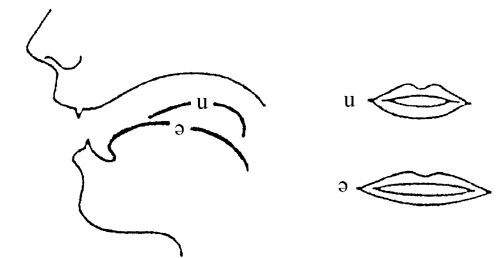
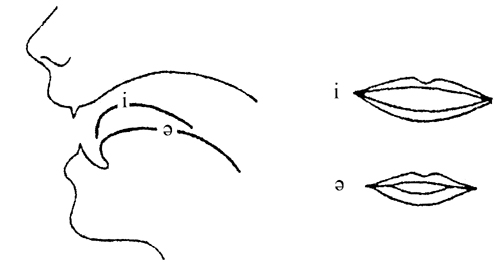
3.3.1 双元音/iE/的发音要领
1)舌位从/i/的位置向/E/滑动,但在不到/ E /的位置即停止。
2)舌位由高到低,牙床从半闭到半开,唇形由扁平到略大,成自然状态。 |
 |
练习一
ear
ear hear dear fear nuclear rear near appear gear clear
eer
deer beer steer peer cheer queer sheer sneer career pioneer volunteer
engineer mountaineer
ere
mere here severe sincere sphere interfere cashmere
ier
pierce fierce frontier pier cashier premier
ea
idea theatre ideal idealism Korea really realize
eo
theory geological theological
er
hero period serious superior inferior mysterious experience cafeteria(自助餐馆)
iou
curious serious mysterious
ia
Italian Australia brilliant India Columbia California
io
period million billion
ie
audience convenient inexperienced
iar
familiar peculiar
练习二
mere
mill fear fill
beer bill here hill
pier pill tear(n.) till
Weird will spear spill
练习三
1. I fear he can’t hear me clearly.
2. The atmosphere here is very clear.
3. Come nearer and sit here.
4. She is really dearer than a deer
5. Dear, dear, beer is really dear.
6. It’s clear that the man with a heavy beard is from Korea.
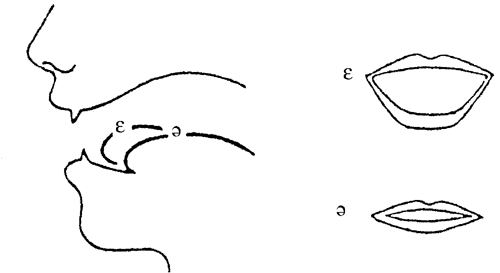
3.3.2 双元音/ZE/的发音要领
1)英语单元音中没有/ε/这个音,这是一个开口程度介于/e/和/A/之间的一个前元音。发/ZE/时,舌身压低,舌位从/ ε /的位置向/E/滑动,但在不到/ E /的位置即停止。
2)舌位由高到低,牙床由大于半开到略小于半开,唇形由扁平到自然。 |
 |
练习一
are
prepare care dare declare aware share bare hare rare mare fare stare
compare scare square area
air
air pair fair chair repair hair stair
ear
tear bear wear swear pear
eir
their heir
ere
where there therefore
练习二
air
ear declare clear
hare hear share sheer
fair fear dare dear
pair peer bear beer
mere mare tear tear(n.)
练习三
1. The pear is over there on the chair.
2. Share the pears out fairly.
3. Where are their parents?
4. Where there’s a will, there’s a way
5. Wherever there’s oppression, there’s resistance
6. The boy was scared because there was a pair of bears over there.
7. They looked for their hairbrushes everywhere upstairs and downstairs,
but they aren’t anywhere.
8. On a mare goes the mayor,
To the fair at the Square,
Prepared to buy a little bear,
That will sit on his fair chair.
9. The seed ye sow, another reaps;
The wealth ye find, another keeps;
The robes ye weave, another wears;
The arms you forge, another bears.
3.3.3 双元音/uE /的发音要领
1)舌位从短元音/u/的位置迅速地向/E/滑动,但在不到/E/的位置即停止。
2)舌位由高到低,牙床由小到大,由半合到半开。
|
 |
练习一
ure
sure pure lure cure endure assure ensure insure secure mature
u(r)
during curious curiosity duration fury furious jury security Europe
oor
poor moor boor
our
tour tourism tourist
ue
cruel cruelty fuel duel influence
ua
casual dual(双重的) February
练习二
1. Are you sure the steward is all right?
2. I’m sure that’s pure gold.
3. The curious tourist enjoys his China tour.
4. The poor man was assured that his child could be cured.
5. Their parents should ensure their security.
6. Behold the furious duel
Between the casual tourist
And the rural jeweller
For a curious and luxurious jewel.
|